21 female pose references for drawing and AI photoshoots
Study 21 female mannequin pose references, with drawing tips for standing balance, seated support, torso turns, hand-held objects, and AI portraits.
Written by
AI Pose Refs Team
Practical guides to choosing pose references, planning portrait series, and using references in your own AI image workflow.
A pose can seem clear until you try to draw the hidden arm or describe the turn of the hips. A simplified mannequin gives you fewer details to sort through while you work out those relationships.
This set contains 21 AI-generated female mannequin drawings, including standing poses, kneeling and seated arrangements, and rear views with different arm positions. Several include a cup, a phone, or a simple support. The eight examples below show what to study before adding a face, clothing, or a finished setting.
Use them as drawing and composition guides. They do not guarantee accurate anatomy or an exact pose match in another AI image.
Read the feet before drawing the standing figure
In the crossed-leg example, follow each thigh down to its ankle before drawing the outer silhouette. The legs overlap, and the feet point in different directions. That small arrangement is easy to lose if you draw both legs as matching vertical shapes.
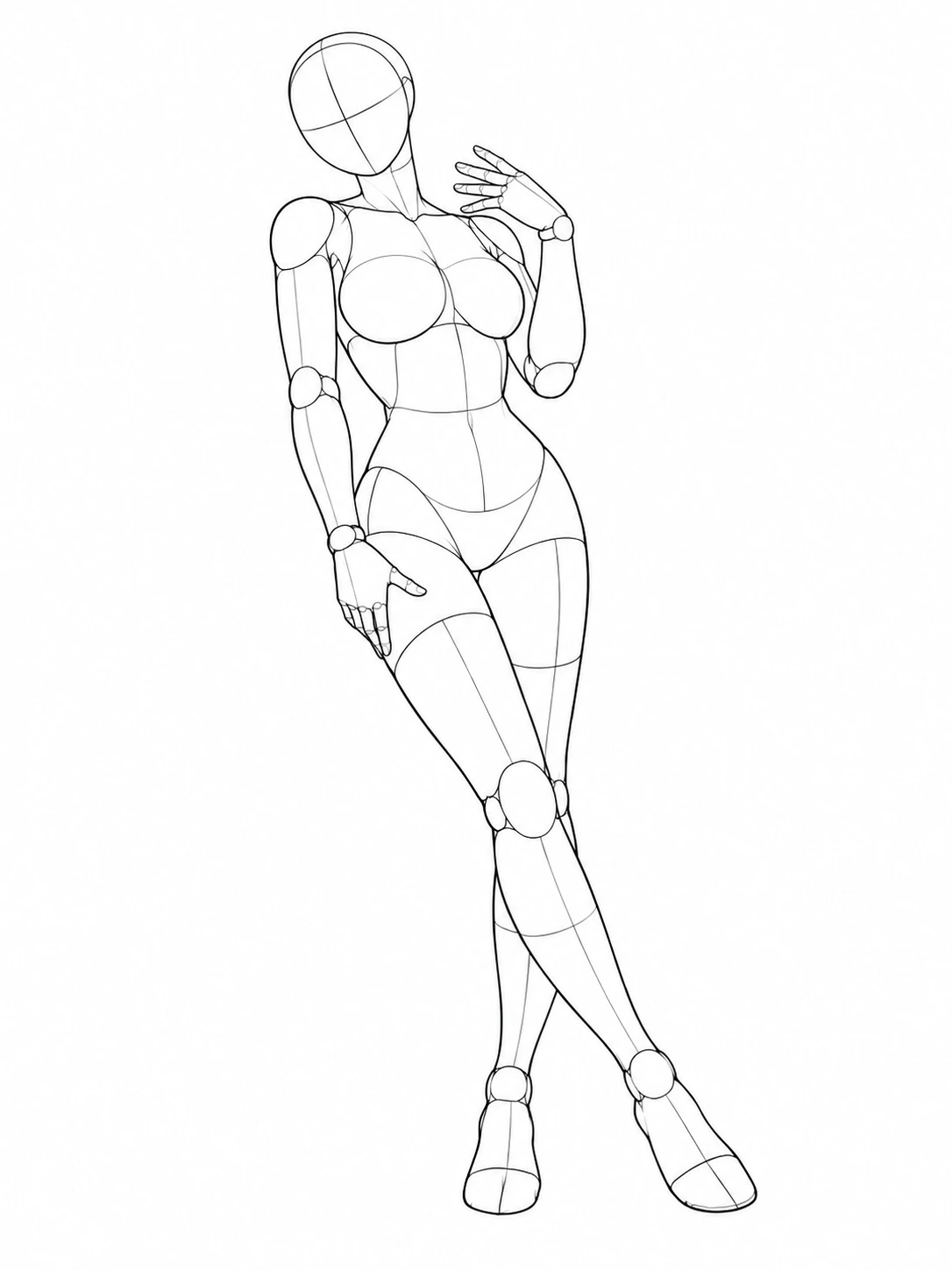
Sketch the shoulder line and pelvis line lightly, then compare their angles. Keep the head tilt separate from the torso tilt. You can practice this reference at thumbnail size using an oval head, a rib-cage shape, and a pelvis block before working on the contours.
The raised-leg pose adds a more obvious support: one foot rests on a small stool. Notice the different heights of the knees and the hand near the lifted thigh.
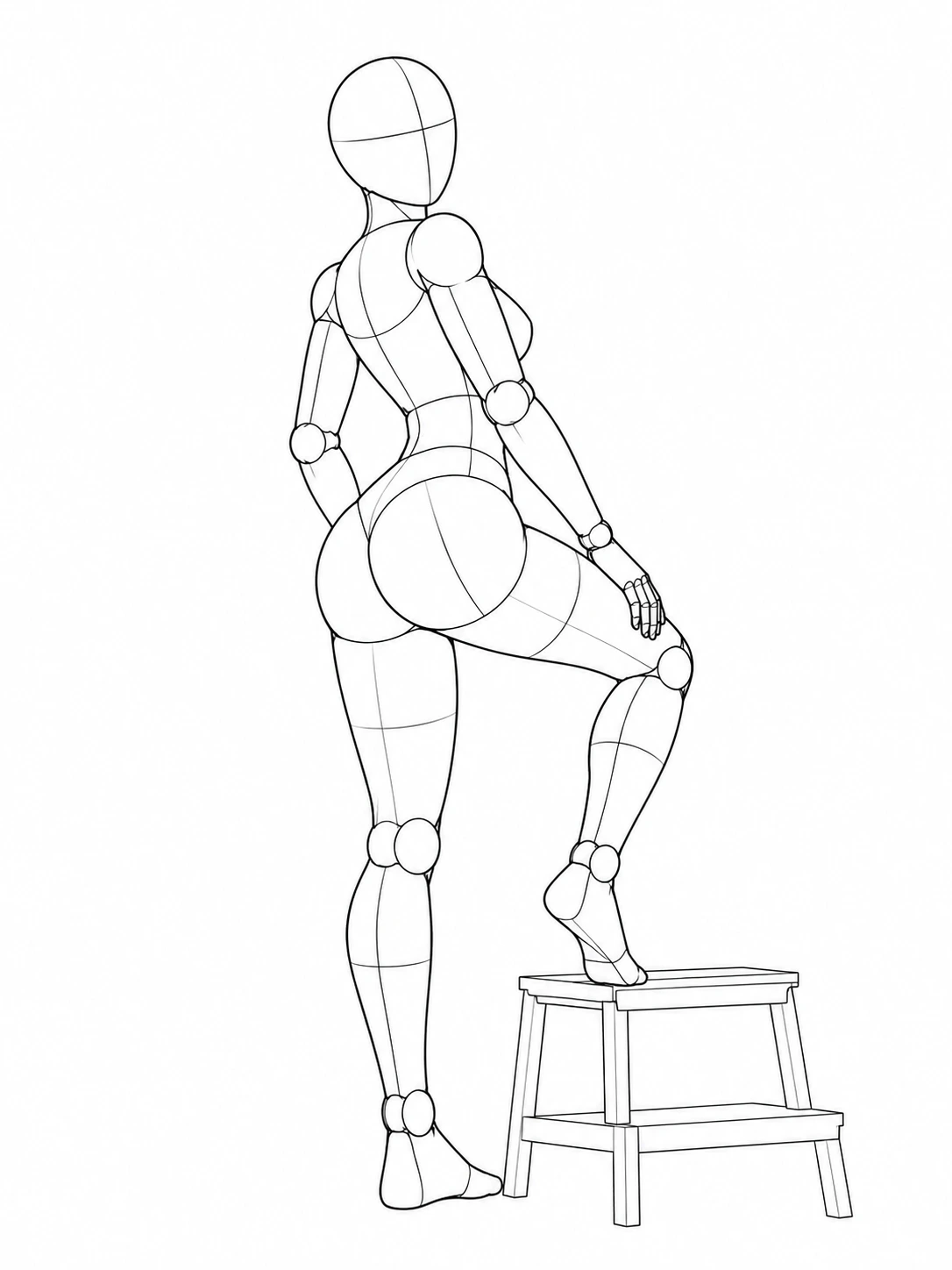
Include the stool in your first sketch. Its height helps explain the leg position; removing it too soon leaves you guessing where the raised foot belongs.
Separate folded legs from the torso
Kneeling compresses the lower-body silhouette. In this example, both knees appear beneath the pelvis, while the raised elbow opens a large space beside the head. Draw that space as carefully as the arm itself.
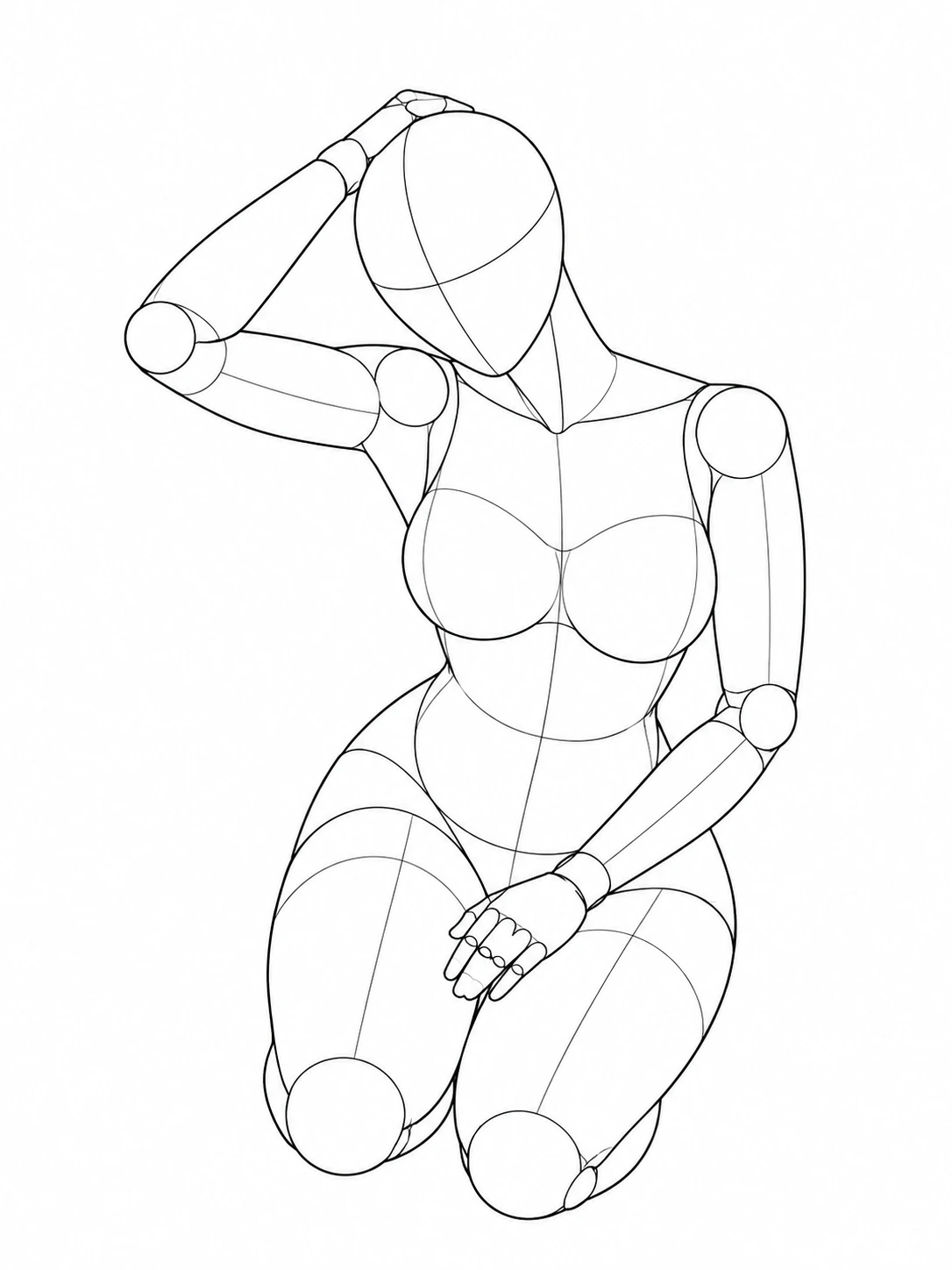
Work from the pelvis toward each knee. The circular joint markers help you locate bends, but they are simplified drawing forms. Check the connecting limb segments instead of assuming a neat circle makes the anatomy correct.
The seated phone pose has a different support pattern. One hand reaches down to the floor, and the folded legs spread across the lower part of the image.
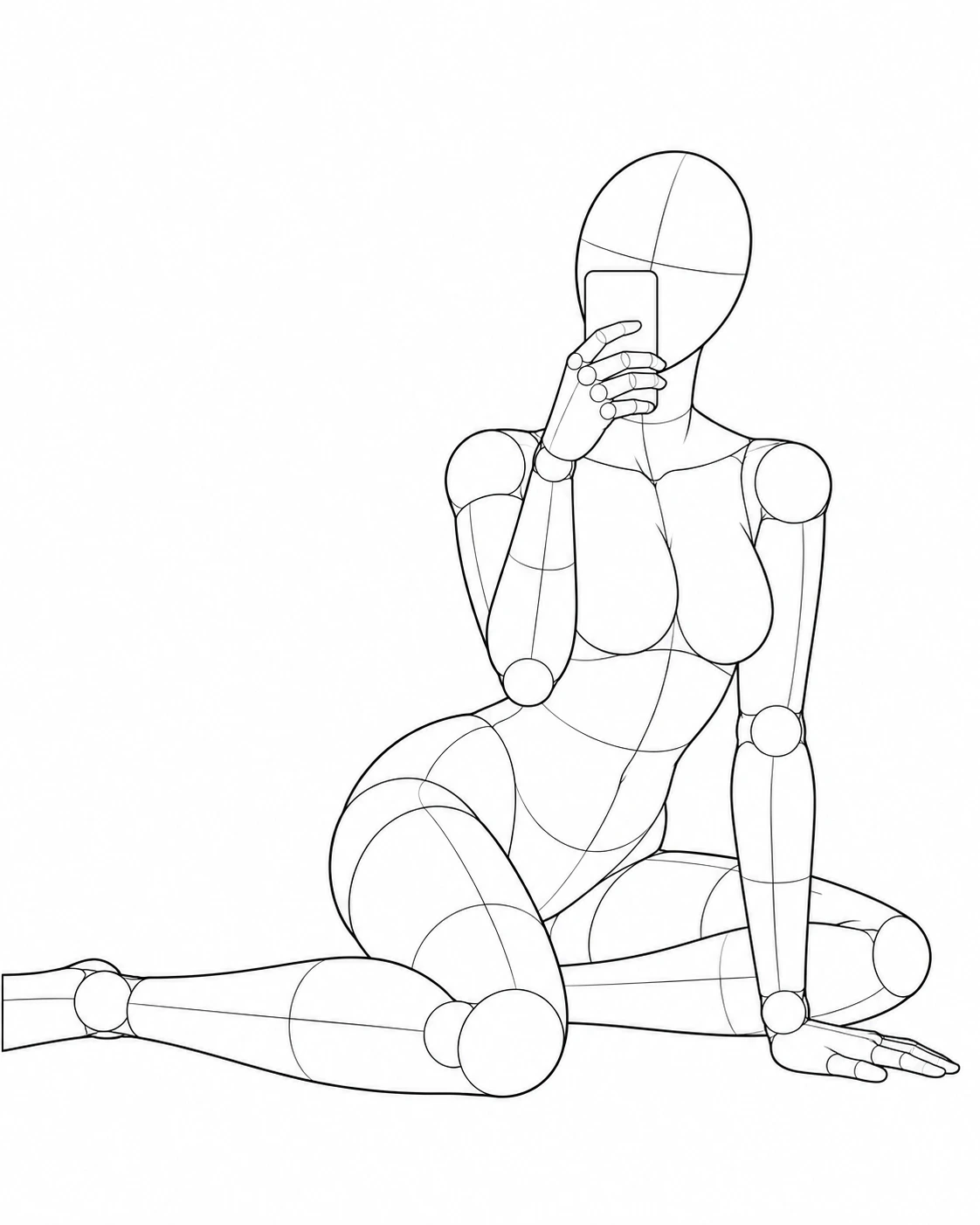
Mark the supporting palm and the visible leg overlaps before refining the torso. Preserve the spaces between limbs. Closing a small gap can make a seated pose much harder to read.
Use rear views to study shoulder and hip direction
The rear three-quarter examples show how much a gesture depends on the relationship between the upper body and pelvis. In the lifted-heel pose, trace the back's center guide, then compare it with the direction of the pelvis block.
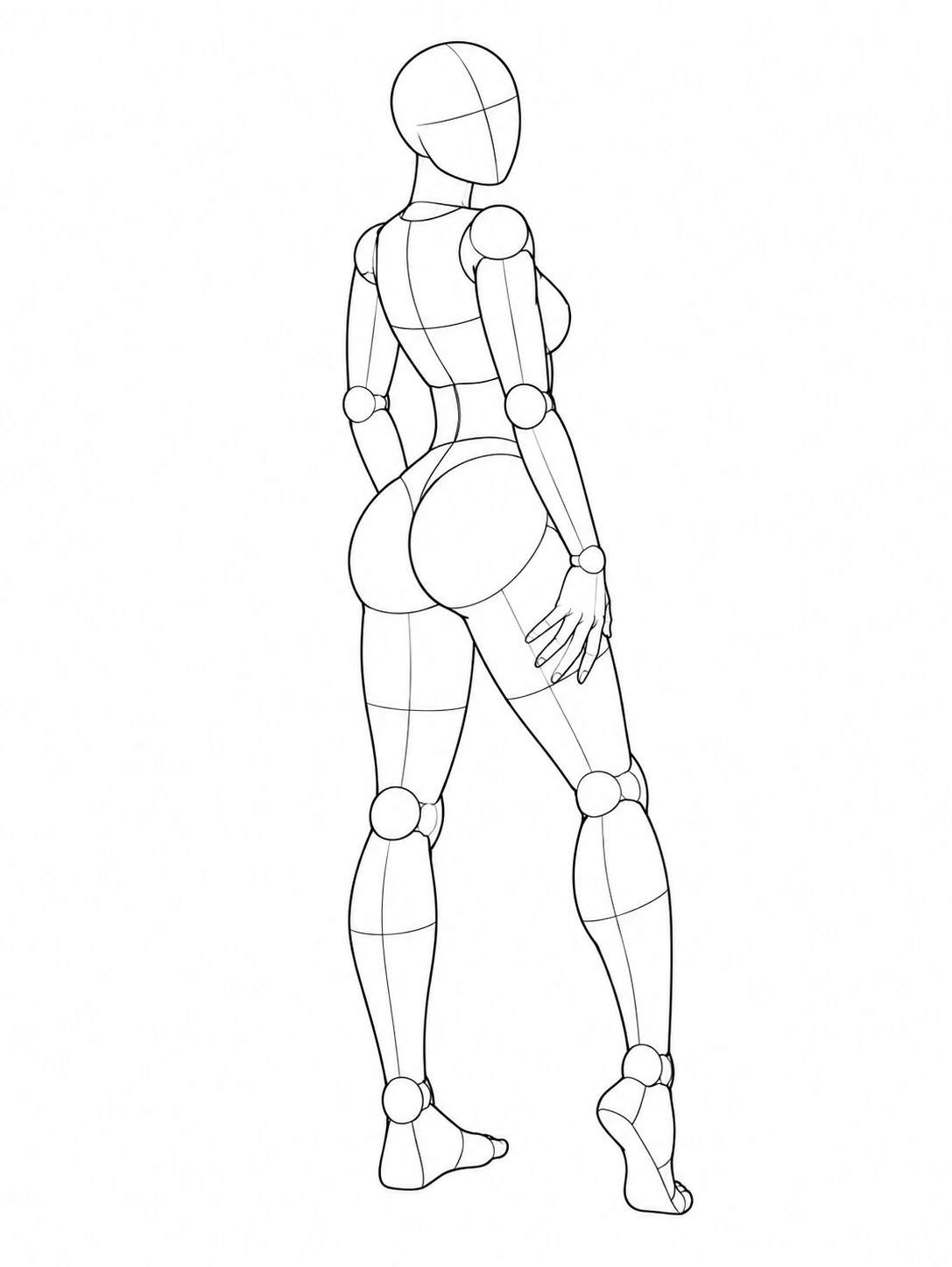
Draw the nearer shoulder first, then place the far shoulder using the overlap you can actually see. Avoid making both sides equally wide simply because the mannequin's construction looks symmetrical in other places.
The raised-arm rear view gives you another shape to compare. Follow the visible shoulder into the upper arm, then locate the elbow before placing the hand.
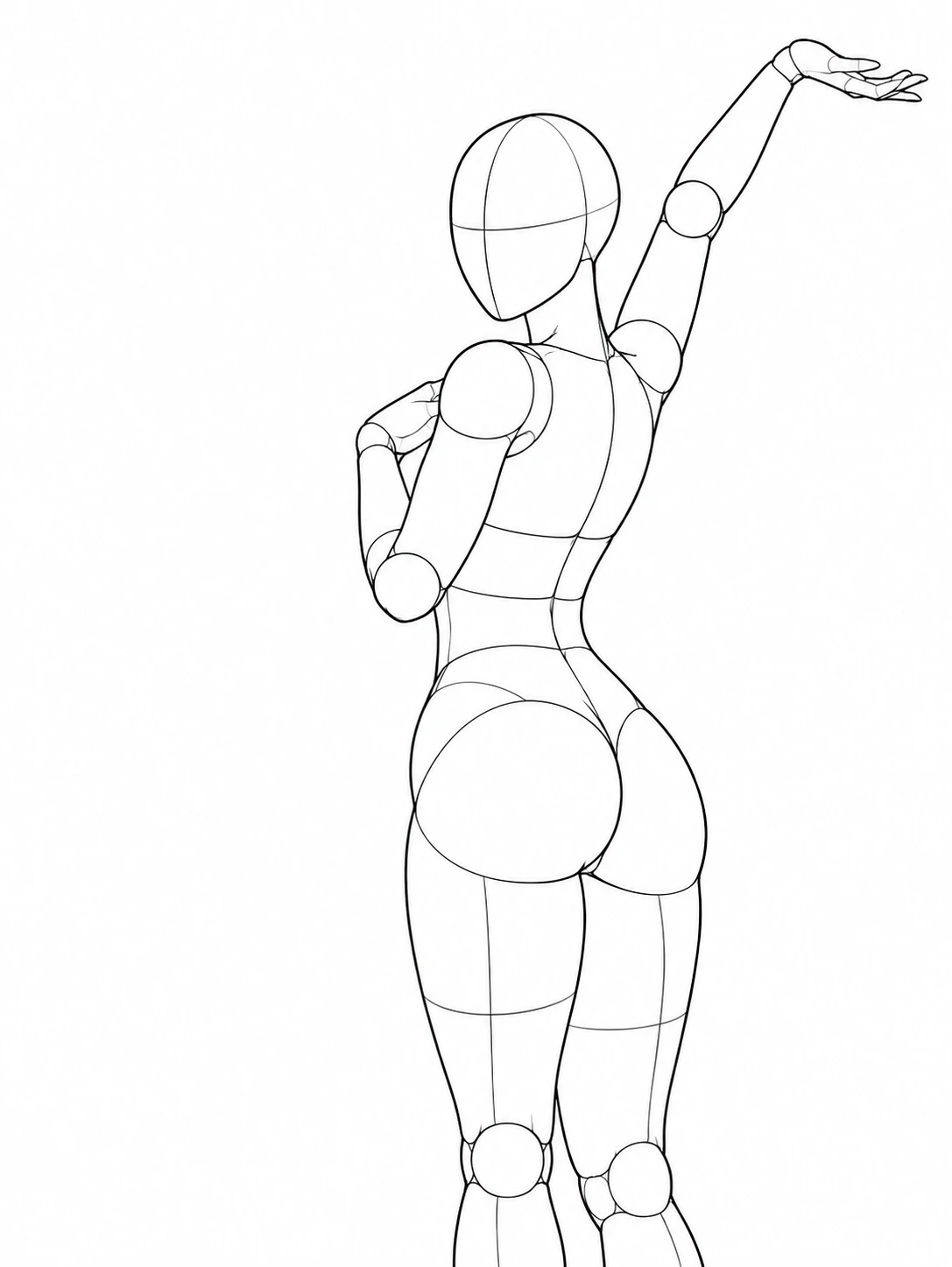
These drawings are separate compositions. Use each one's visible information rather than treating the collection as matching rotations of a single pose.
Let held objects explain the hands
The cup study gives the raised hand a specific task. Start with the cup's outline, then check how the fingers wrap around it and where the wrist joins the forearm.
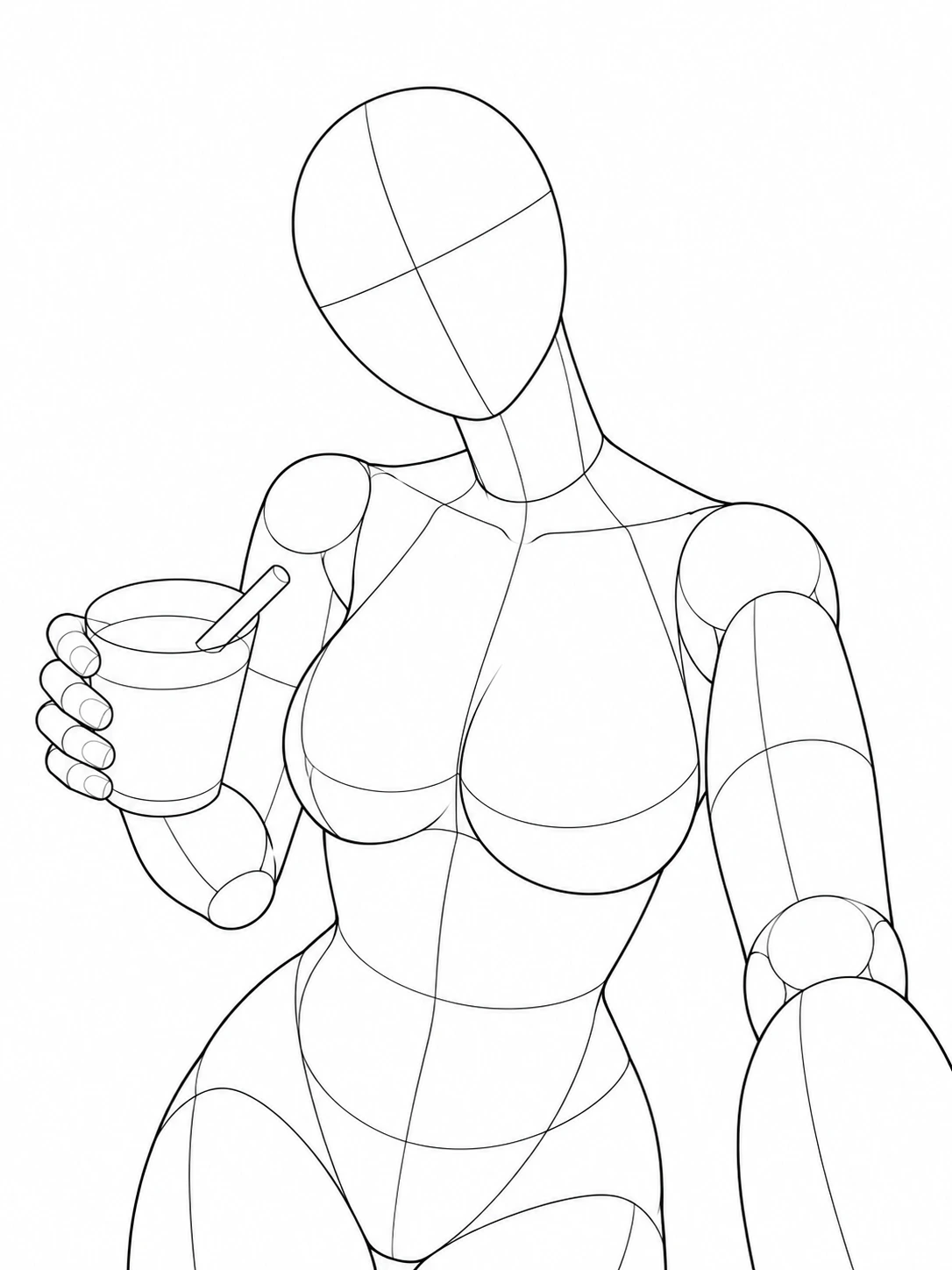
Keep the existing crop during a first study. You can practice the hand and forearm without inventing the missing lower body. For another composition, choose a reference that already shows the framing you need.
A phone held in front of the face creates a useful occlusion study. Part of the head disappears behind the object, while the other arm bends behind the head.
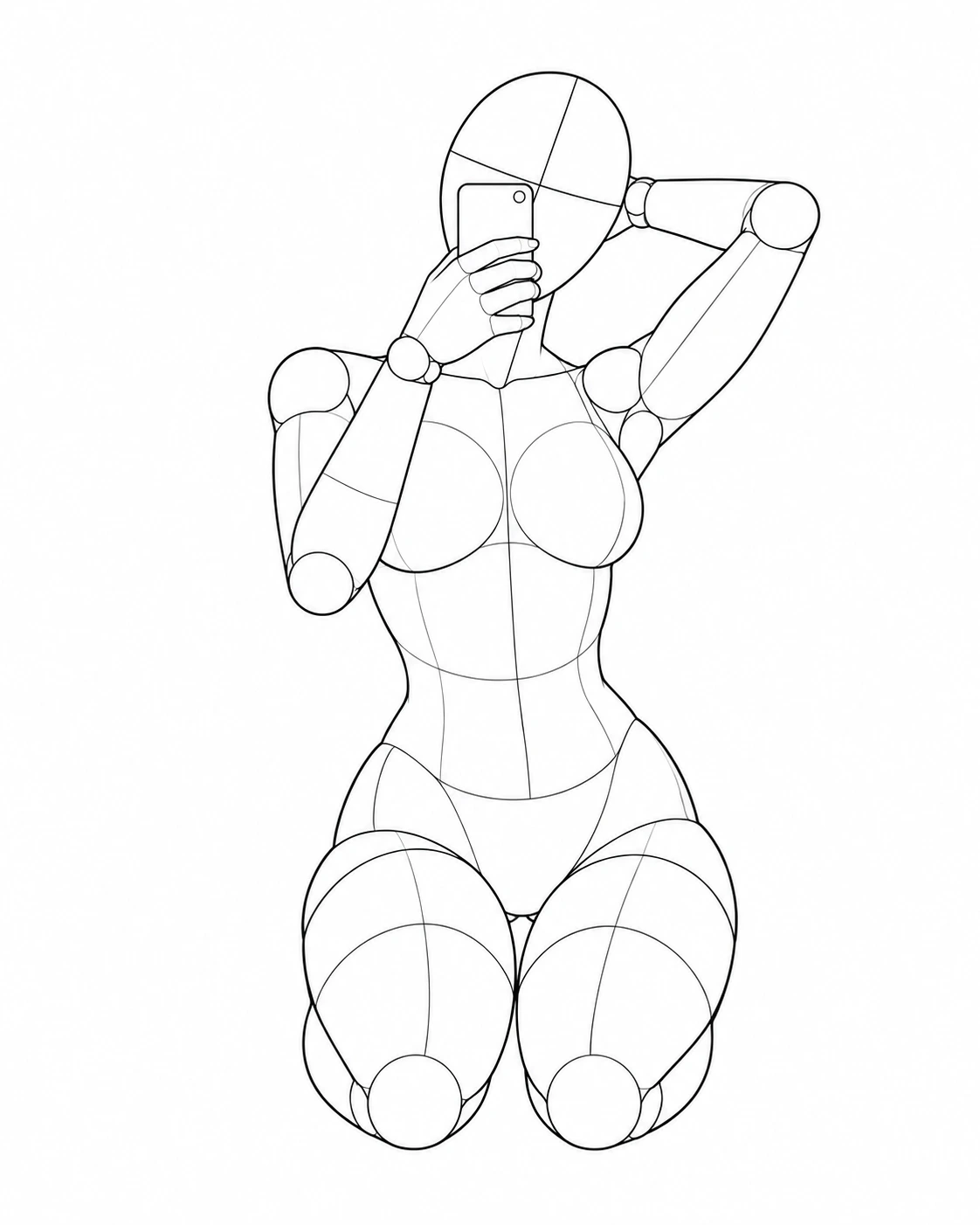
Trace each visible arm from shoulder to wrist. Accept the gaps where the phone or head hides a segment. If a generated result produces a confusing joint, the guide to checking AI hands and limbs can help you inspect the connection before changing the fingers.
Carry the visible pose into an AI photoshoot
Choose one drawing whose camera angle and crop suit the shot. If your image tool accepts pose references, attach that image and keep the first prompt focused:
Use the attached mannequin drawing as the pose reference for an adult fashion portrait. Preserve the visible torso angle, hand positions, limb overlaps, and crop. Keep held objects in their shown positions. Use a simple outfit and a plain background.
Compare the first result with the reference before adding more styling. Check the largest differences first: a changed torso turn matters more than a small contour detail. Image input and text instructions still require visual review.
Use a separate character reference when identity matters. Our pose reference versus character reference guide explains those roles; the reference-image prompt guide covers writing around the chosen pose.
For drawing practice, pick one example and sketch its main masses before copying the contours. Browse the pose gallery when you need a different composition. Check each reference's usage information before using or sharing it; this article makes no commercial-use or redistribution grant.
Related posts
Find pose ideas, plan portrait series, and use references in your own AI image workflow.