24 female pose studies: hands, turns and support
Explore 24 female mannequin pose studies through eight drawing exercises on hand contact, torso turns, overlapping arms, and seated or kneeling support.
Written by
AI Pose Refs Team
Practical guides to choosing pose references, planning portrait series, and using references in your own AI image workflow.
A hand gripping a foot, resting on a ledge, or holding a phone changes how the whole figure reads. Place that contact poorly and even a carefully drawn torso can feel disconnected.
This collection contains 24 AI-generated female mannequin pose studies. The eight selections below focus on the connections that make a gesture understandable: where fingers meet an object, which arm passes in front, and how the body reaches its support. Each is a separate composition. The simplified joints are useful construction cues, but hand shapes and anatomy still need your judgment.
Draw the contact before the gesture
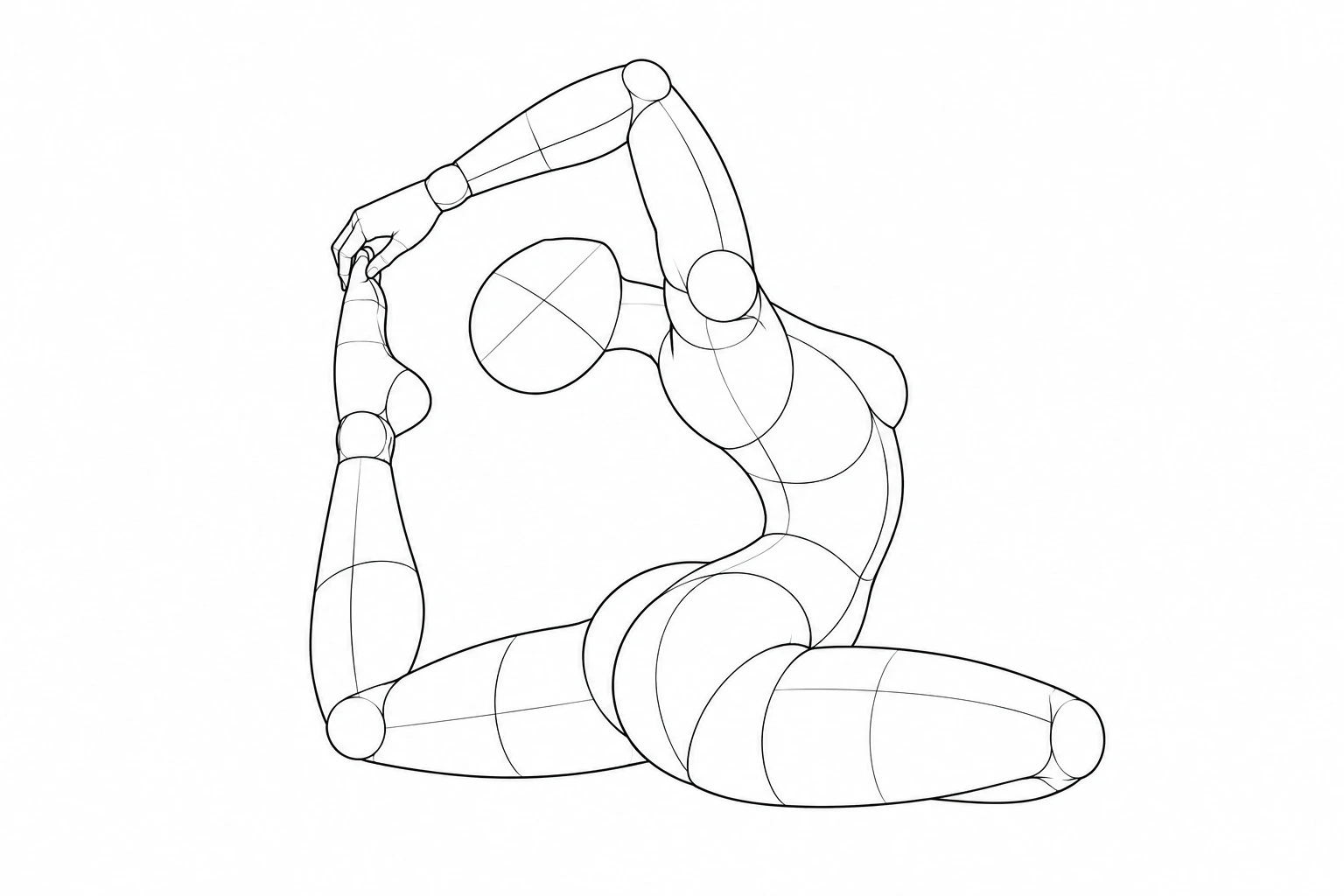
In the floor pose, one visible hand reaches over the head to the lifted foot. Start with that meeting point, then mark the high elbow and the low knee. These three landmarks contain the long curve of the gesture.
Sketch the open space between the head, arm, and raised lower leg as one shape. If you shrink that opening while copying individual contours, the pose becomes cramped. Add the rib cage and pelvis only after the outer arrangement fits your page; their different angles explain the side bend.
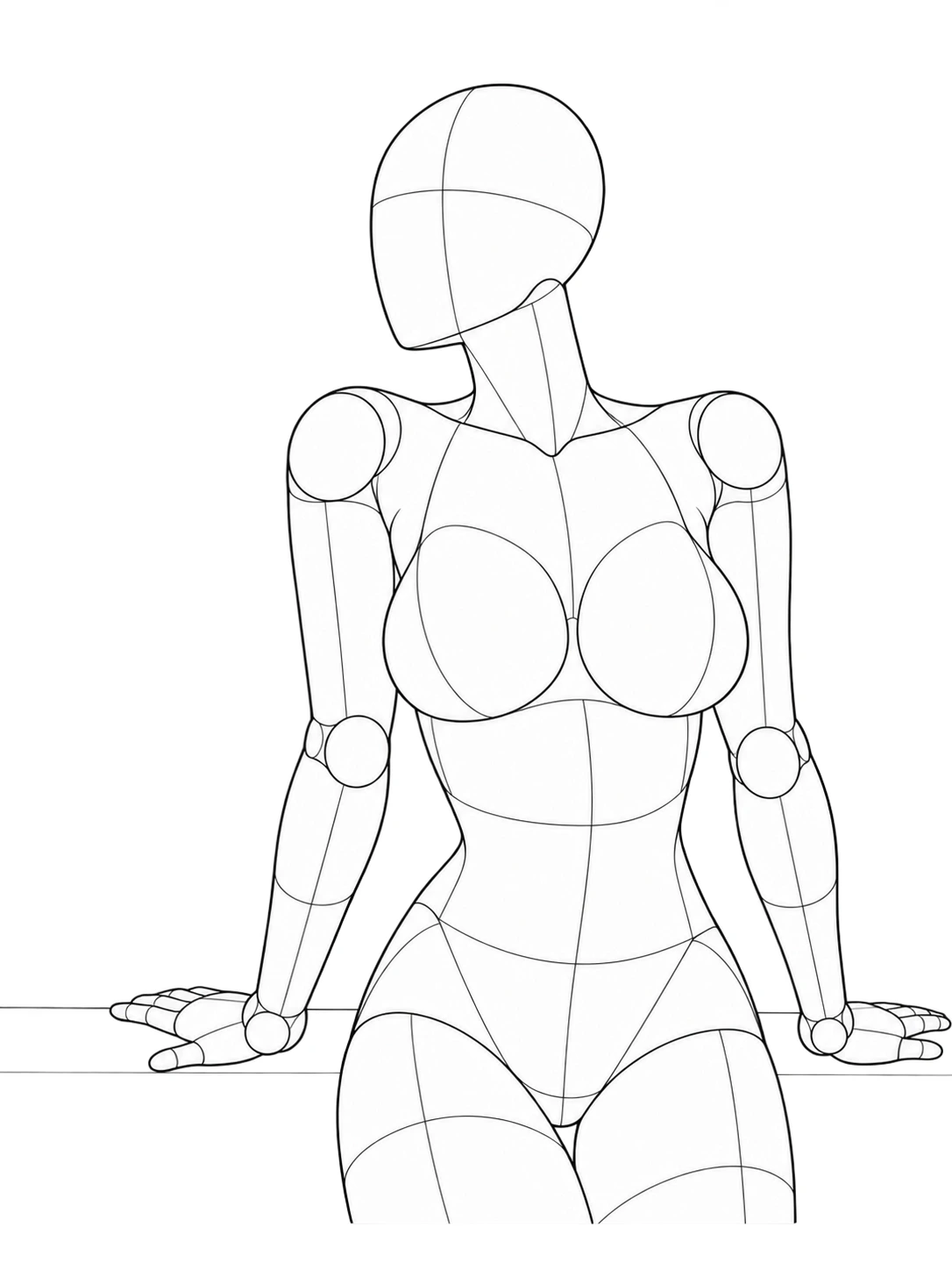
The ledge study reverses the hand's role: both palms provide support behind the body. Put down the horizontal edge and wrist positions first. Then connect the wrists to the elbows and shoulders. Notice how the head turns while the chest remains broadly facing the viewer. The crop ends at the thighs, so this drawing does not establish a complete standing or seated arrangement.
Keep the phone, head, and torso on separate axes
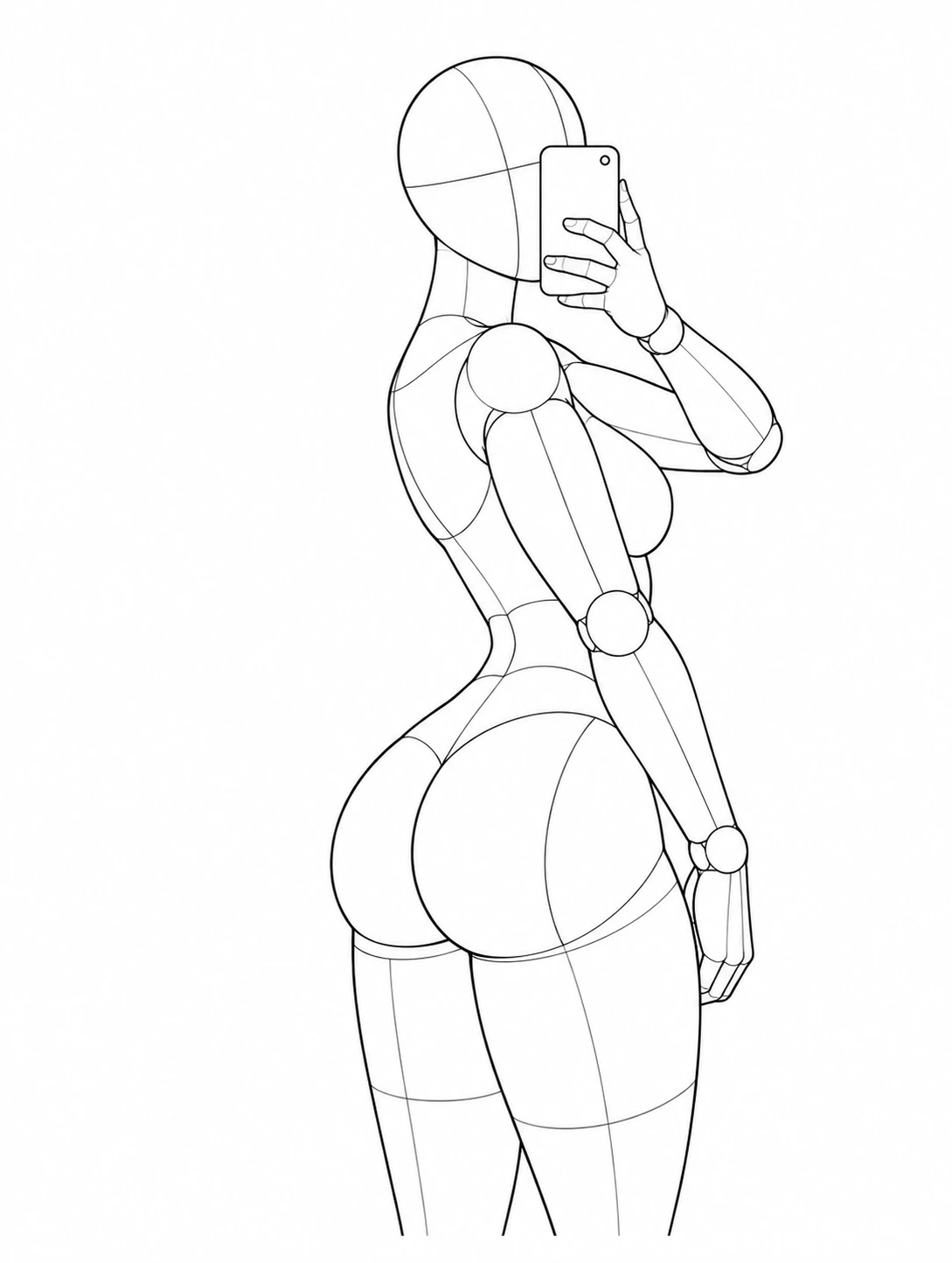
The phone study combines a rear three-quarter view of the pelvis with a head turned toward the raised hand. The lowered arm creates a diagonal across the visible side of the body.
Draw the phone as a flat shape before placing fingers around it. Compare its edges with the head's construction lines: the object and head need not share an angle. Keep the phone's overlap over the face. Moving it outward to reveal the whole head changes the composition, even if the body stays close to the reference.
Build the raised hand from its palm
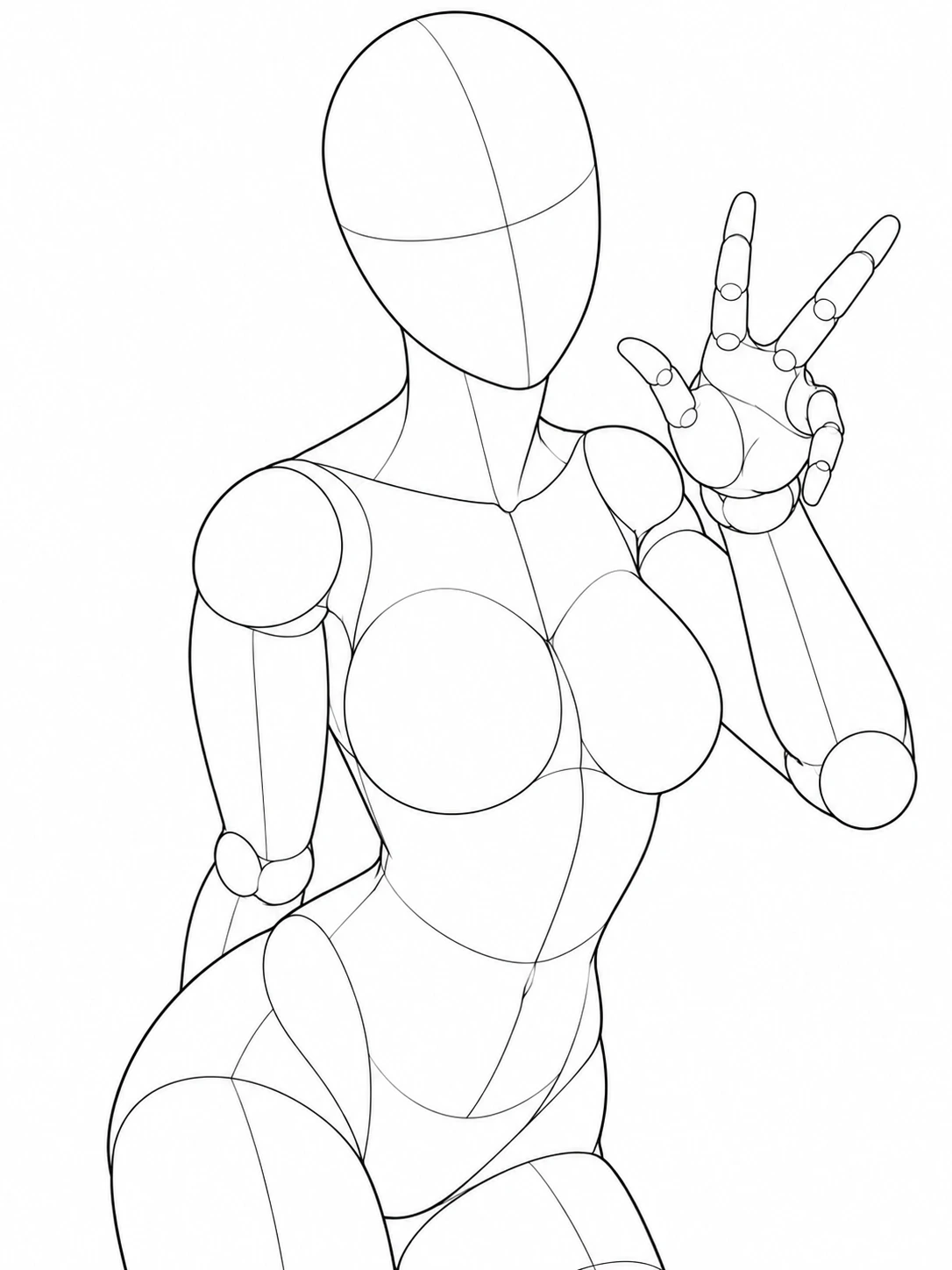
The V gesture takes up substantial space beside the head. Block in the palm, the two extended fingers, and the projecting thumb before adding joint divisions. Compare the gap between the fingertips with the width of the head. That relationship gives you a useful scale check.
Treat the folded fingers as overlapping forms rather than a row of equal cylinders. The mannequin's construction marks can help locate bends; they are not a substitute for checking whether each finger connects sensibly to the palm.
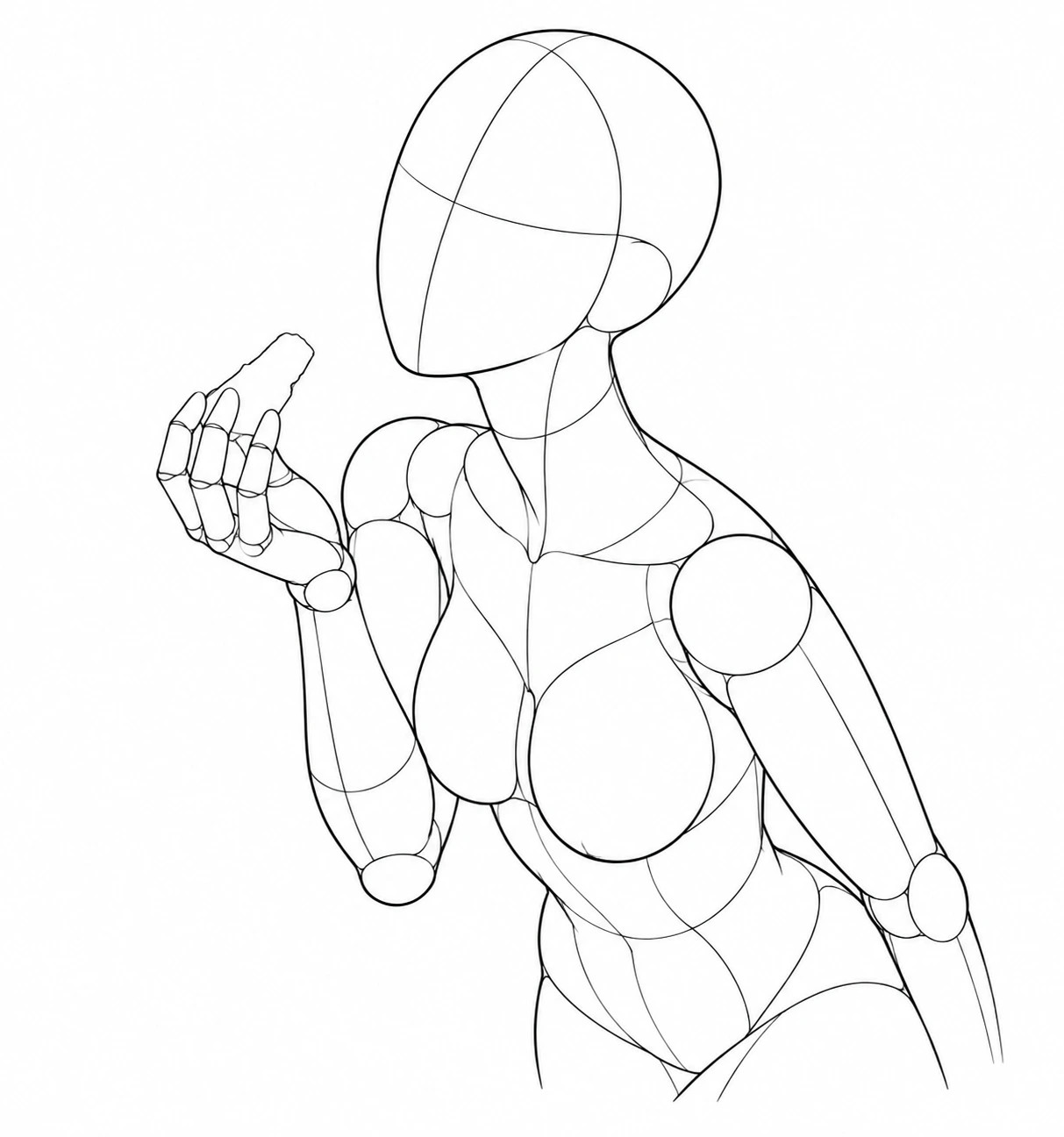
Here the raised hand brings a small object near the mouth as the torso leans forward. Mark the distance between the object and face before drawing the forearm. A small change there can turn an approaching gesture into contact. Keep the prop description simple: its outline in this generated study does not clearly establish a particular utensil.
Let one arm overlap explain the seated pose
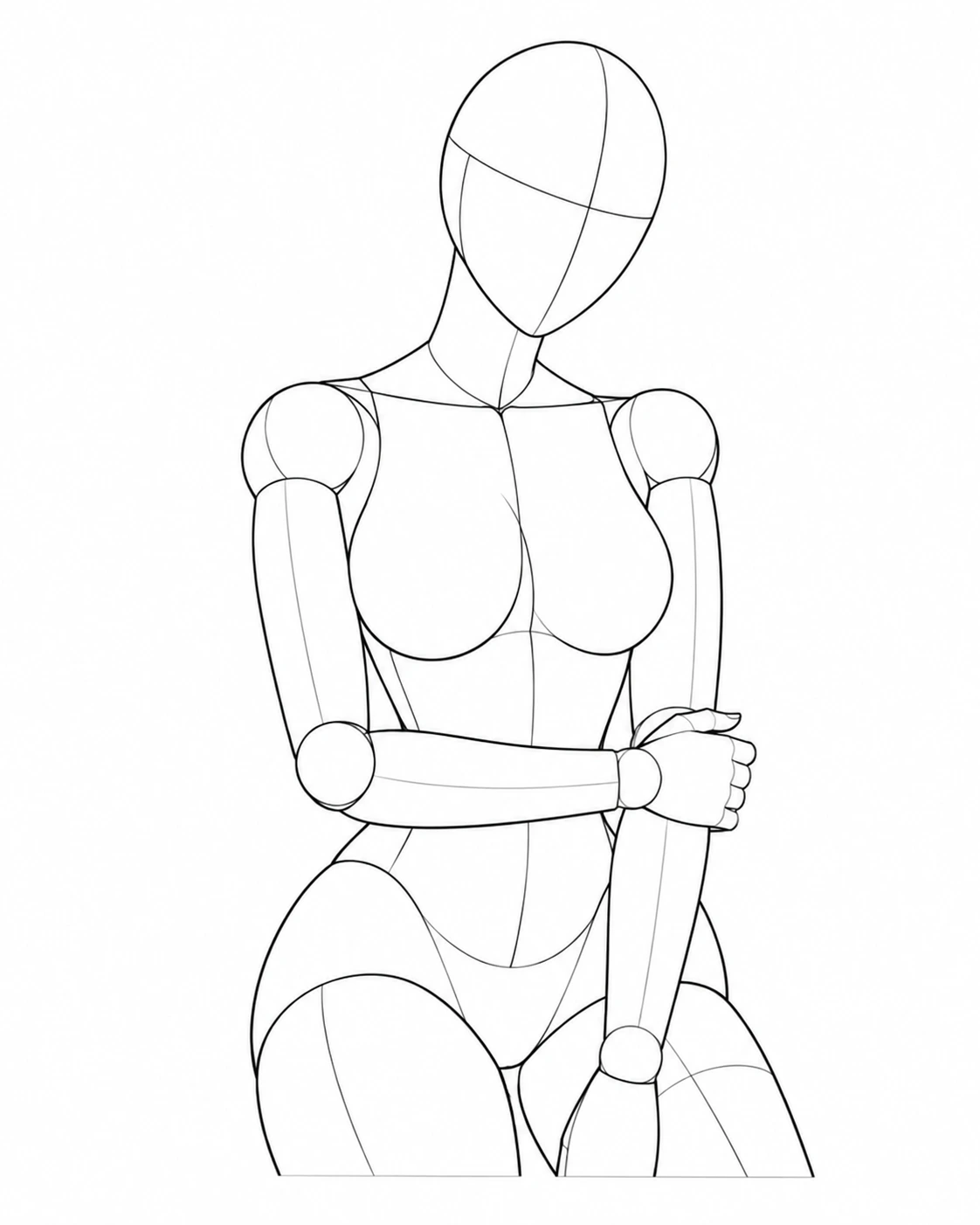
One forearm crosses the abdomen, and its hand holds the opposite forearm just below the elbow. The other arm continues downward toward the lap.
Draw both arm paths lightly, then decide which contour remains visible at the grip. Leave the covered section interrupted. A continuous outline through the hand makes the arms look transparent. Compare the nearly horizontal crossing forearm with the head tilt; that difference keeps this quiet composition from feeling rigid.
Place the low poses across the page
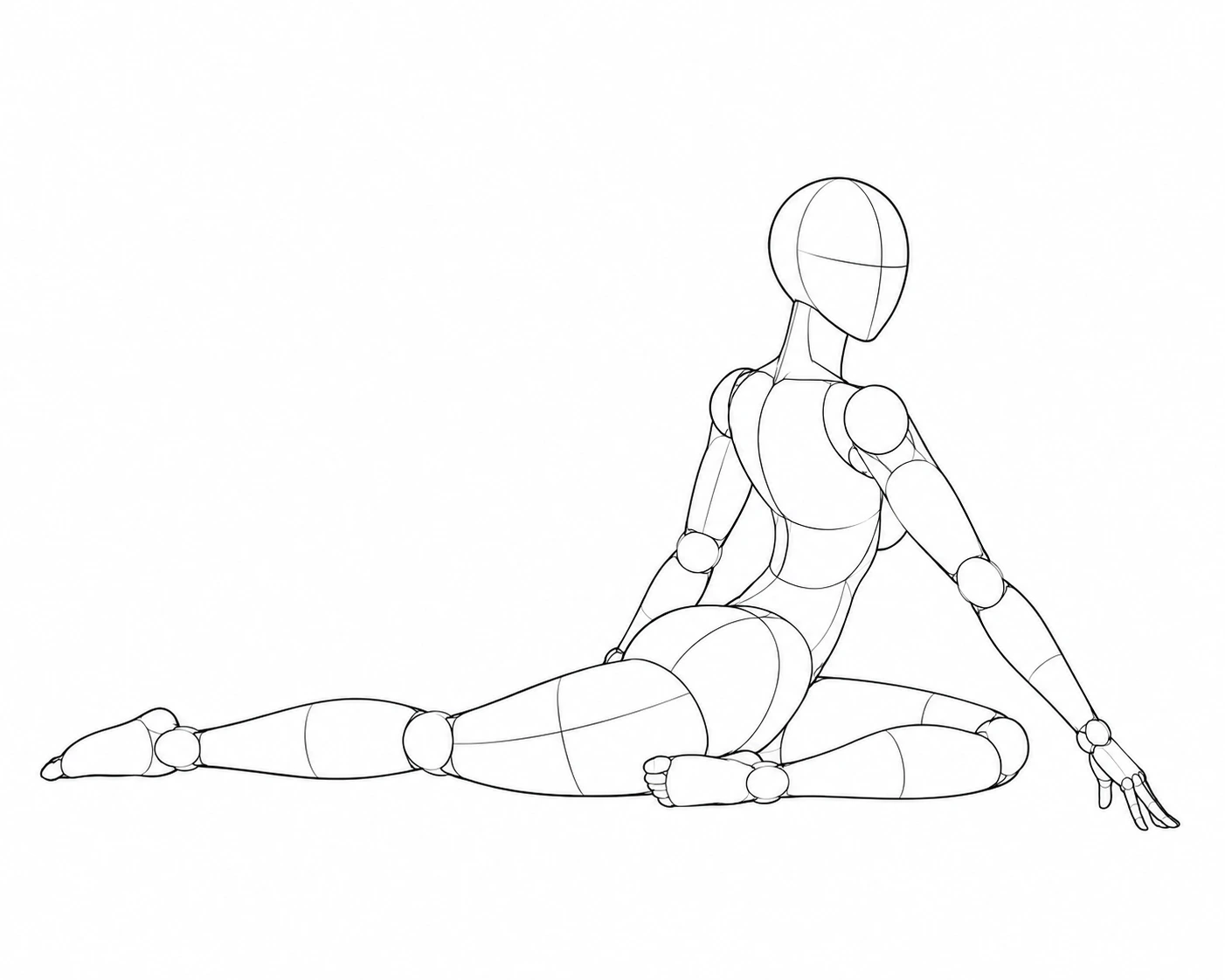
This pose needs a wide frame. One leg reaches left while the other folds across the front; the outer hand extends the silhouette to the right. Mark those endpoints before building the torso. Follow each leg from the pelvis to its own knee and ankle, especially where the front foot overlaps another form.
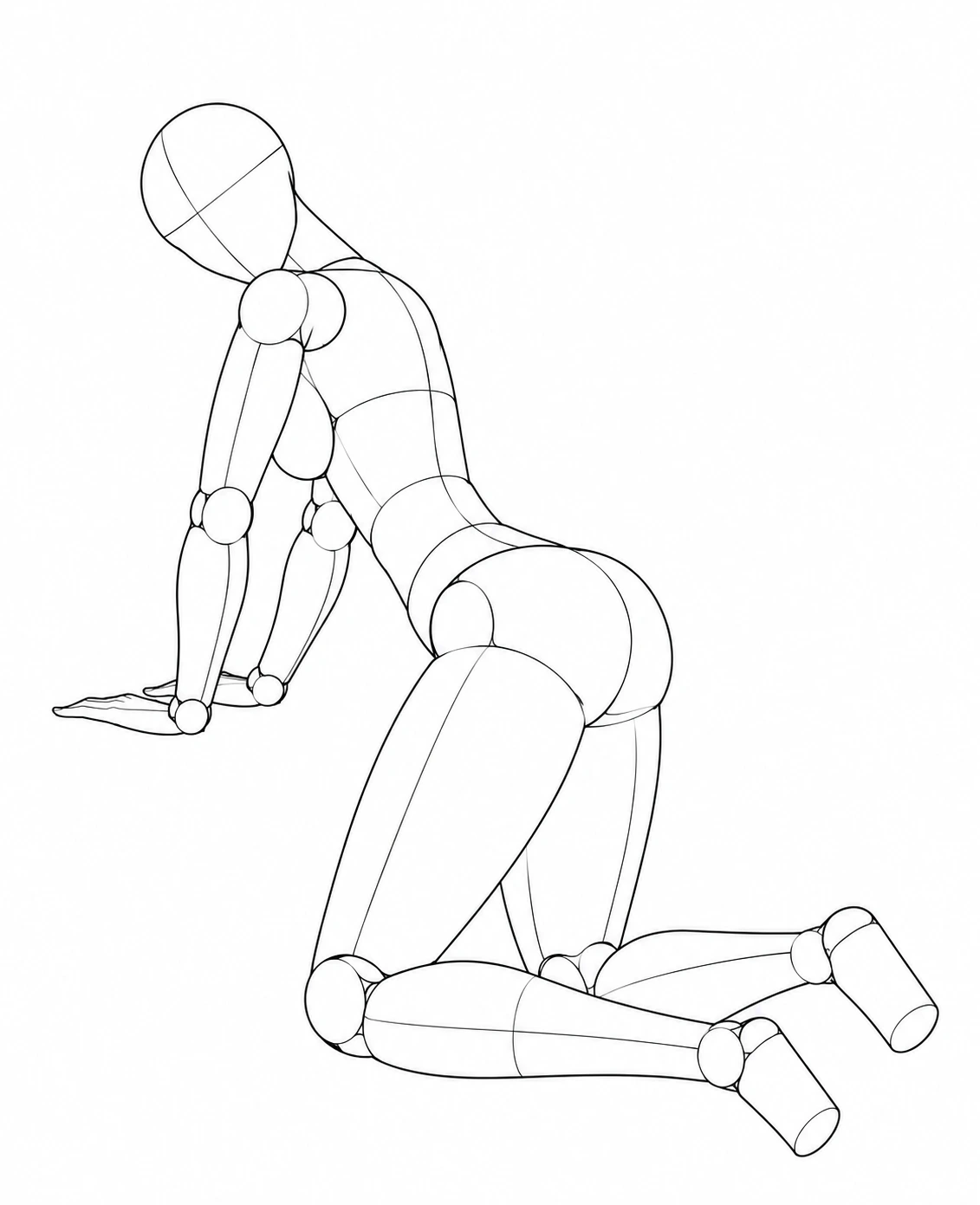
The kneeling study has a different depth arrangement. The palms sit higher in the picture than the knees, with no supporting surface drawn between them. Preserve that relationship instead of automatically placing all four contacts on one floor line. Use the shoulder-to-wrist direction and the overlapping lower legs to check the forward lean.
Carry one relationship into your next image
For an AI composition, attach one study and name its decisive relationship: “both palms braced behind the torso” or “phone covering part of the turned face.” Specify the existing crop and camera view, then compare those features in the result before adding styling. Text instructions alone may shift them.
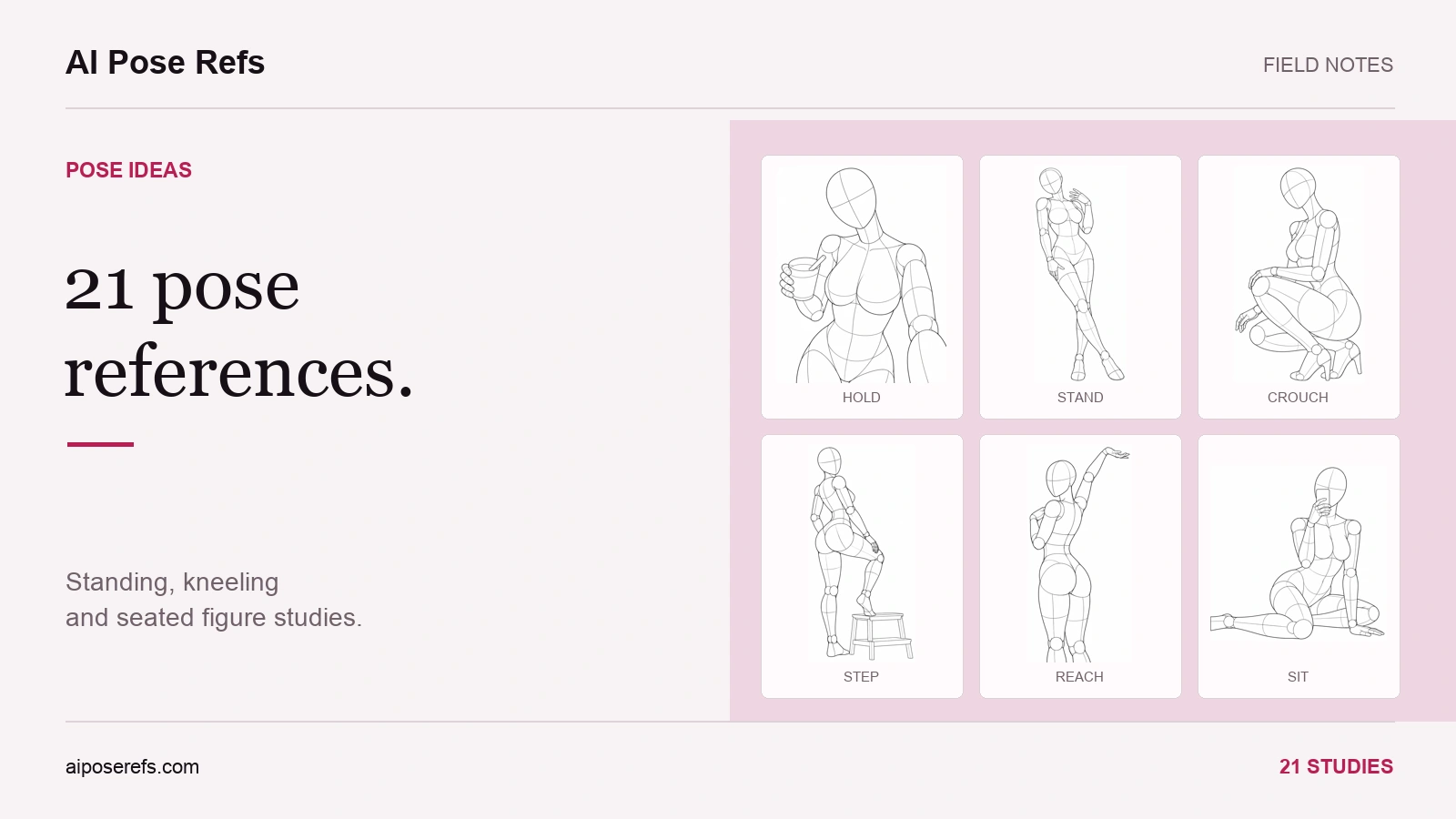
For drawing practice, make a quick landmark sketch, hide the reference, and redraw the contact from memory. Compare it with the image afterward. Continue with the earlier 21 female pose references, or browse the pose gallery for another arrangement.
Related posts
Find pose ideas, plan portrait series, and use references in your own AI image workflow.